

Flyleaves #2
A few good things I read this month

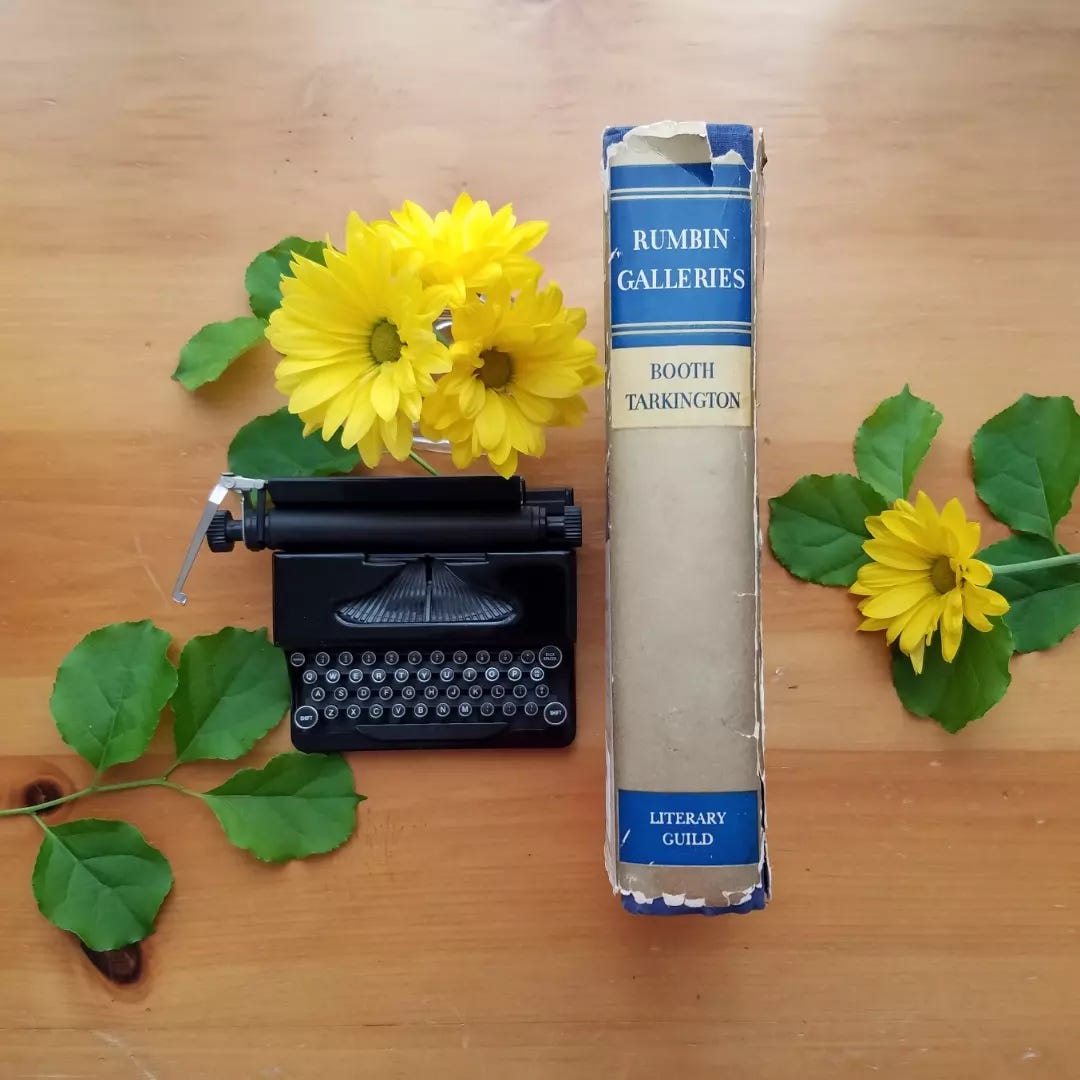
Welcome to Flyleaves, an informal monthly post where I share two or three of the best or most interesting things I read this month!
Traitor’s Purse by Margery Allingham (a re-read)
I’ve always had complicated feelings about Margery Allingham’s books: liking some and disliking others, liking some in spite of flaws or criticisms—but I’ve always been pretty sure that Traitor’s Purse is the high point of the Albert Campion series (so far; I’ve read the first twelve). It’s a unique plot, both among Golden Age mysteries in general and beside the earlier thriller romps and the more recent conventionally-structured whodunits of the Campion series itself: a detective who, suffering from temporary amnesia after a head injury, is actually the only person who holds key pieces of information to foil a looming criminal plot, but cannot remember them himself—and doesn’t dare confide his condition to anyone else, because he doesn’t know who to trust.
Ironically, Traitor’s Purse is the one book in the series that you can’t appreciate most fully unless you’ve read what comes before. Without having done that, you would be dropped blind into Campion’s world in almost the same way he is through his amnesia, not able to recognize the poignant subtleties as he comes up against various recurring characters without knowing them, groping tentatively for a sense of what his relationship with them means.
Allingham is similar to Dorothy L. Sayers in that both started out with a detective who was a semi-caricature and books that were somewhat frivolous but intelligent, and then gradually took them deeper and deeper as they went along. Where Peter Wimsey and Harriet Vane have specific, serious issues to surmount, Albert Campion’s development is more of a gradual maturation, a series of slow epiphanies regarding himself and others. The (not even consecutive) sequence of novels that center most on Campion personally, and unfold an unusual and satisfying love story for him, form a sort of bridge that spans from the early “thriller” period of the series, over the standard “detective” period, into the more experimental wartime phase: Sweet Danger, Dancers in Mourning, The Fashion in Shrouds, Traitor’s Purse. I find it remarkable, even though I don’t love the middle two of the four.
My Amiable Uncle: Recollections About Booth Tarkington by Susanah Mayberry
I’d never heard of this book until I saw a post by Literate Indy (one of the best accounts on Twitter) about the ebook being free (as of this writing, it still is.) Since Tarkington has long been a favorite author, of course I had to snap it up. It starts off a little slowly, as Mayberry (Tarkington’s grand-niece) relates incidents from his early life at second hand, but becomes more lively and interesting when she moves on to her own personal memories of the days when Tarkington was already a famous author, but to her, a fascinating and adored uncle, from childhood up through young womanhood.
Tarkington comes across as a man who was always passionately fascinated by human nature, particularly its absurd side (his sense of humor sounds like it could be trying to members of his household, since he delighted in watching chaos unfold). I was also struck by the description of his sheer intelligence and his knowledge of and interest in a variety of subjects, such as art, history, and economics, which isn’t always evident within the fairly modest scope of his fiction. It seems to sum up the different sides of Tarkington’s character that he wrote a nonfiction book about the Old Masters from his personal collection and their artists and subjects, Some Old Paintings, released in a limited edition and apparently a labor of love, and at the same time wrote delightful fictional satires of art dealers and collectors in the hilarious Rumbin Galleries.
It’s tantalizing to imagine the rich conversation you might have heard around the Tarkington dinner-table and fireside, with a plethora of writers, artists, actors, and scholars often present as guests—and Susanah and her younger siblings were fortunate enough to be right in the middle of it. She also shares excerpts from her uncle’s letters to her when she was a college student, including these interesting observations on fiction writing from after she had written to him to ask his opinion of Henry James:
In the upper view the writer produces the impression that he just reveals his people to you; seemingly their thoughts, characters, and actions are their own. He doesn’t manipulate events for their benefit. He holds to the truth of them and what would happen to them. You are not invited to step upon the stage and be one of them yourself.
In the lower type of novel or play the author asks you to become his principal person—which is the reason that most of the “heroes” and “heroines” of the romantic novels were made of impossible perfections. The reader, believing himself perfect, had to have a perfect “character” to step into—and the youth of my generation saw even Sidney Carton’s drinking as part of his picturesque perfection. If the reader enjoys his vicarious experiences, he says the novel is “good” and vice versa, which is why most men and boys say that our friend Kenneth Roberts is a “good writer” and why some women say he is “tedious”—and, of course, neither “verdict” has anything to do with Mr. Roberts’ merits and faults as a writer. In any book of [Henry] James’s you’ll find an inexhaustible curiosity about the nature of a human being—an untiring analysis of his manifestations and an incomplete revelation of him for the reason that the whole of any such being cannot be known to another—or to himself.
I didn’t like Henry James when I read him as a teenager, but evidently I’ll have to have another go, just to see. But I find this passage particularly striking in light of the modern obsession with “fiction that reflects our own experience,” and even in the insistence of most writing advice over the last few decades that close third-person narration, deeply inside a character’s thoughts and feelings, is the best or only way to go.
Onward and Upward in the Garden by Katharine S. White
I’m in the middle of this one, and loving every page. The only book ever written by White, the longtime fiction editor of the New Yorker, it began as a series of essays starting in 1958 and collected and edited after her death by her husband E.B. White. The first few were essentially informal reviews of current nursery and seed catalogues, with observations on everything from their plant selection, layout, and ink color to their shipping practices and prose style—all of which is more engrossing that you might imagine—and later ones moved on into discussing gardening books, history, flowers in art, floral arranging, and more.
You’ll find a bit of everything horticultural here, from Katharine’s childhood reminiscences of gathering water lilies from a rowboat and trimming straw hats with blossoms from flowering shrubs with her friends, to the history of the lawn mower, to tart commentary on the latest extravagances of flower hybridizers. A characteristic passage from the early chapters:
Mr. Pettingill contributes a slightly testy introduction, in which he takes off against the term “green thumb” and says that “top grade has nothing to do with size” (two ideas I subscribe to), then gets down to business on prices and what’s new. To enjoy Amos Pettingill at his most peppery, though, you must read White Flower Farm Notes, which are bulletins issues at least six times a year and sent to White Flower’s customers. (Non-customers may subscribe.) Here Amos really lets himself go, is chatty, sassy, or lyrical, as his mood dictates, and here he airs his latest enthusiasms and his pet grouches. (“BULBS, BULBS, BULBS. You will now [this was a June issue] please take your Plant Book in hand, and do what you had absolutely no idea of doing—order your bulbs for September-October delivery” and, elsewhere, “Confound it, we do not think customers are always wrong.”) Most lady gardeners I know “simply love” him. I admire him more for his explicit cultural directions, his odd bits of gardening lore, and his sensible descriptions of what he has to sell than for the eccentric personality he has created for himself. I have found that what he says will happen to a plant usually happens to it. White Flower grows good plants, packages them well, and sends exact and detailed directions (Amos again?) with every purchase.
It’s both a charming time capsule of the mid-20th-century gardening scene, and also the sort of book you read with pencil and paper in hand to write down the titles of books and the names of flowers and shrubs mentioned on every page. I also appreciate that it’s from the perspective of a New England gardener—anything that White was able to grow in a Maine garden I can feel pretty sure of being able to cultivate a little further down in the Northeast, and the native plants and wildflowers mentioned are the ones I know and love (along with some new discoveries). I have a feeling a copy of this one will end up on my shelf at some point.
If you enjoy The Second Sentence and you’d like to show appreciation without committing to a paid subscription, you could buy me a coffee or buy a book.
Flyleaves #1

Welcome to Flyleaves, a new and informal monthly post where I plan to share two or three of the best or most interesting things I read this month!
Thanks for introducing me to the Rumbin Galleries. Never heard of this and sounds right up my street.